BRIDGE Consortium
The overarching international consortium integrating clinical, imaging, genomic, and single-cell resources for brain metastasis research.
The BRIDGE Consortium brings together clinicians, scientists, and computational biologists to build an international longitudinal resource linking primary tumors, brain metastases, recurrent intracranial disease, extracranial metastases, blood, imaging, clinical annotation, and multi-omic data.
The overarching international consortium integrating clinical, imaging, genomic, and single-cell resources for brain metastasis research.
Tissue Retrieval and Analysis for Cancer Evolution is the operational program for newly resected BrMs, matched archival primary tissue/data, recurrent BrM tracking, and linked clinical, imaging, and genomic data.
Brain Metastasis Cell Atlas is the public-facing atlas and data resource generated by BRIDGE for single-cell exploration and controlled data access.
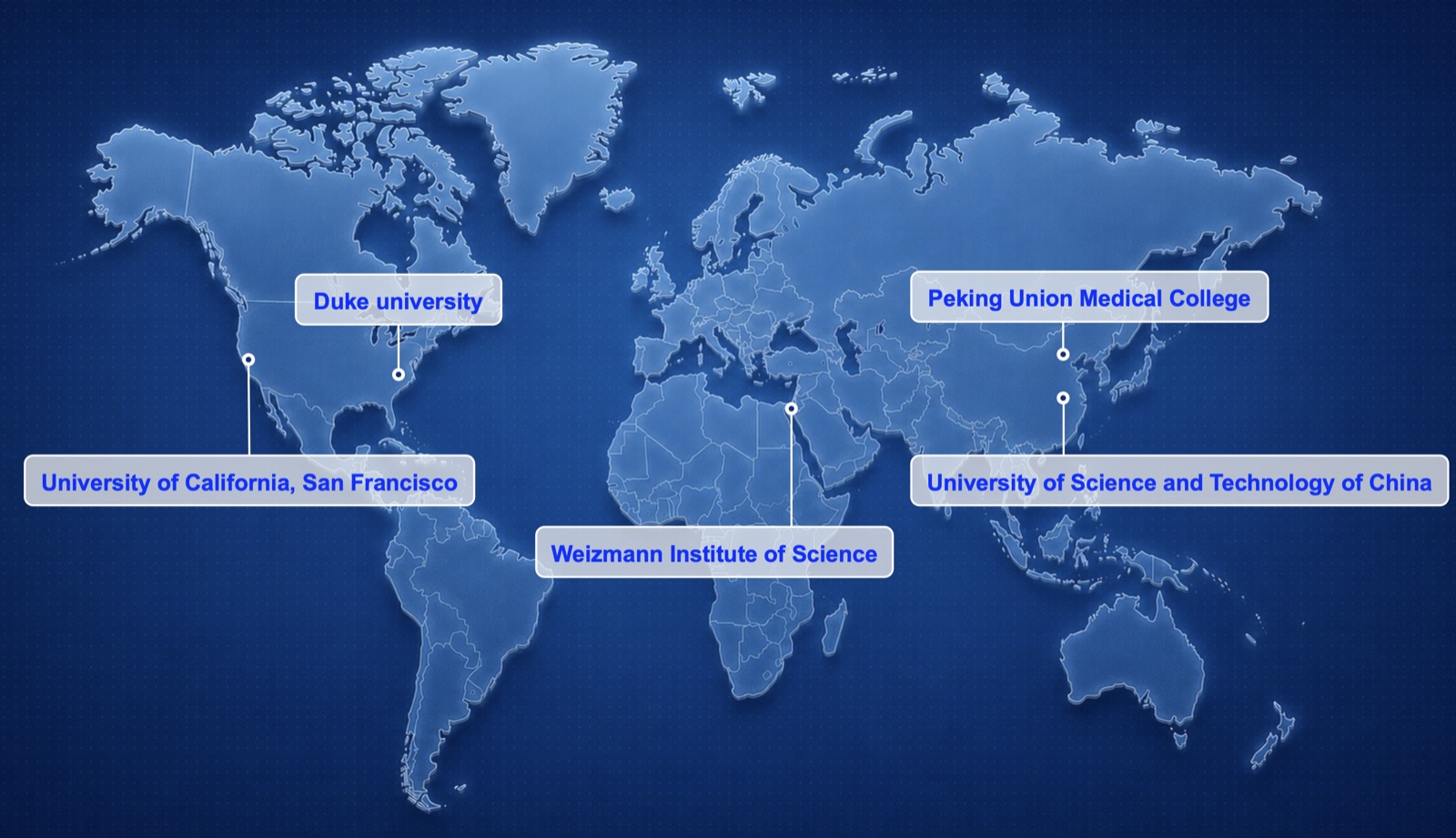
The BRIDGE Consortium brings together an international network of experts from Peking Union Medical College (PUMC), the Weizmann Institute of Science, Duke University, and the University of California, San Francisco (UCSF). By leveraging complementary expertise in cancer biology, neuroscience, clinical oncology, and data science, BRIDGE coordinates TRACE cohort operations and BMCA public atlas resources to accelerate breakthroughs in brain metastasis studies.
Visit BMCA for single-cell atlas resources or the ecDNA portal for genomic architecture studies.